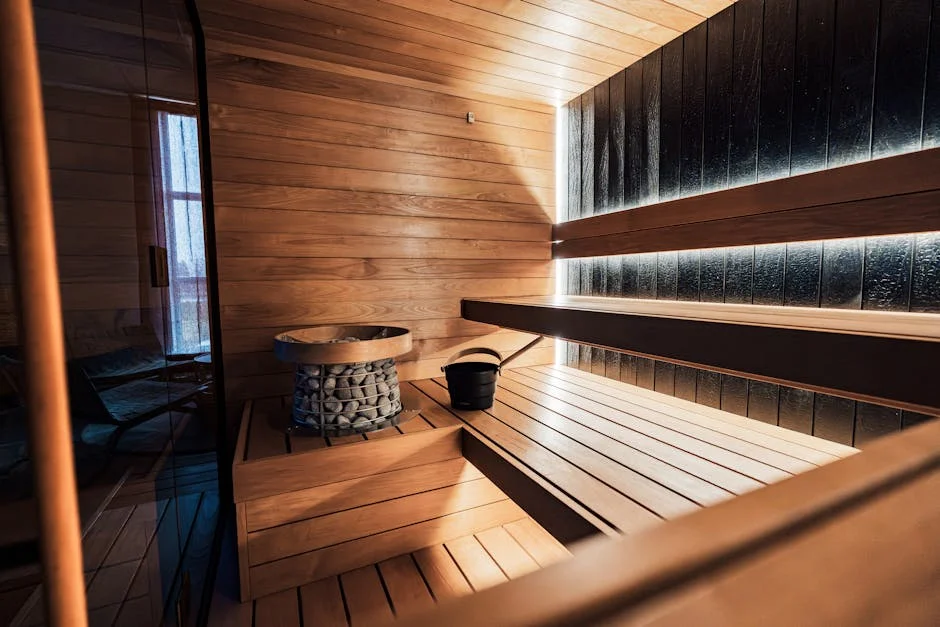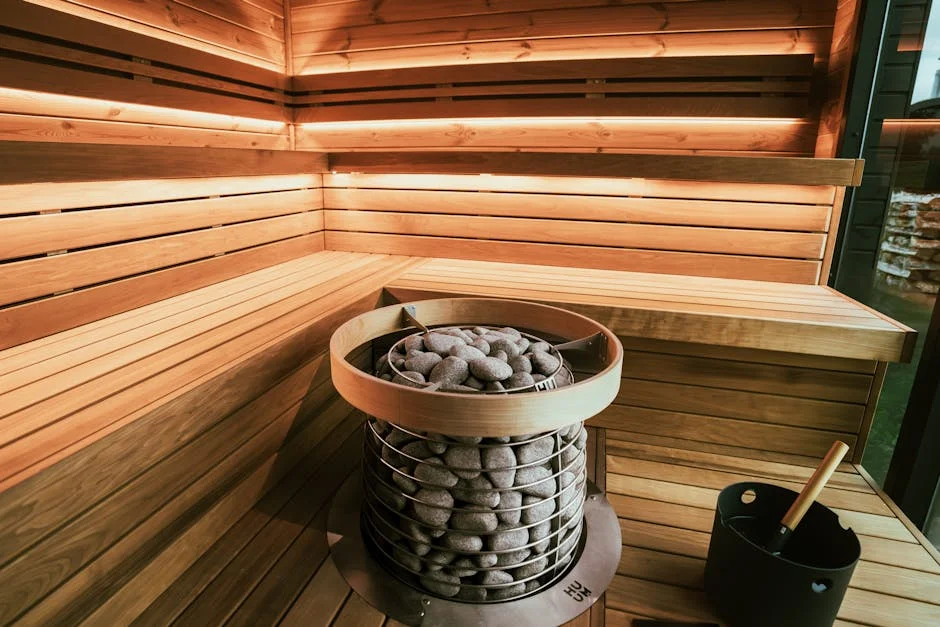
Electric Sauna Heater Buyer's Guide: Sizing & Installation

Affiliate disclosure: Some links on this page are affiliate links. If you buy through them we earn a small commission at no extra cost to you. Recommendations are research-driven; we don't claim personal use of every product reviewed. Product prices and availability are accurate as of the date published and are subject to change. Always check Amazon for current pricing before purchasing. Learn more.

Quick Picks
Harvia The Wall Electric Sauna Heater, Powerful 240V Sauna Stove for Medium Sized Rooms, Illuminated Operating Panel, Electric Heater for Dry Sauna Room, Includes Stones (8kW - Stainless Steel)
Quality construction suited to regular home sauna use
Buy on AmazonGeneric 4.5KW Steam Room Generator Kit,Electric Sauna Heater with Aromatherapy Steam Head,Self-draining Design,Fast Heating for Household SPA Shower and Relaxation Room 3kw
Quality construction suited to regular home sauna use
Buy on AmazonSmart Water Heater Timer: Optimize Hot Water Usage - Compatible with Alexa - Installs in Minutes, No Plumbing Required. Compatible with Electric Water Heaters.
Quality construction suited to regular home sauna use
Buy on Amazon| Product | Price Range | Top Strength | Key Weakness | Buy |
|---|---|---|---|---|
| Harvia The Wall Electric Sauna Heater, Powerful 240V Sauna Stove for Medium Sized Rooms, Illuminated Operating Panel, Electric Heater for Dry Sauna Room, Includes Stones (8kW - Stainless Steel) best overall | $ | Quality construction suited to regular home sauna use | Confirm specifications match your specific installation space and electrical requirements | Buy on Amazon |
| Generic 4.5KW Steam Room Generator Kit,Electric Sauna Heater with Aromatherapy Steam Head,Self-draining Design,Fast Heating for Household SPA Shower and Relaxation Room 3kw also consider | $ | Quality construction suited to regular home sauna use | Confirm specifications match your specific installation space and electrical requirements | Buy on Amazon |
| Smart Water Heater Timer: Optimize Hot Water Usage - Compatible with Alexa - Installs in Minutes, No Plumbing Required. Compatible with Electric Water Heaters. also consider | $ | Quality construction suited to regular home sauna use | Confirm specifications match your specific installation space and electrical requirements | Buy on Amazon |
| General Electric Installation Kit also consider | $ | Quality construction suited to regular home sauna use | Confirm specifications match your specific installation space and electrical requirements | Buy on Amazon |
| Generic 3Pcs Sauna Heater Power Connection Cable with Plug. Can be Used to Connect to The Sauna Power Control Box. also consider | $ | Quality construction suited to regular home sauna use | Confirm specifications match your specific installation space and electrical requirements | Buy on Amazon |
Choosing an electric sauna heater means reconciling three variables at once: the cubic footage of your room, the electrical capacity of your home, and the safety requirements that govern both. Get the sizing wrong and the room never reaches proper sauna temperatures. Get the electrical work wrong and you’re looking at a code violation or worse. A strong grasp of the sauna installation requirements specific to electric heaters is the foundation every good buying decision rests on.
The heater is only one piece. Wiring, clearances, ventilation, and control compatibility all shape which unit belongs in your build. The five products covered here represent the range of what buyers are sourcing , from full heater assemblies to the electrical accessories that connect and time them.
What to Look For in a Sauna Electric Heater
Kilowatt Output and Room Volume
Output matching is the most consequential decision in heater selection. The standard residential sizing formula calls for roughly 1 kW per 45 cubic feet of room volume, adjusted upward for rooms with masonry walls, exterior-facing walls with inadequate insulation, or glass panels that bleed heat quickly. A 6×8×7-foot sauna , a common backyard cabin footprint , runs about 336 cubic feet, which puts the target output in the 7, 8 kW range. Undersizing a heater produces a room that climbs slowly and plateaus short of the 180, 195°F range where most users find the experience satisfying.
Oversizing is less often discussed but genuinely problematic. A heater that’s too large for the room drives temperatures past comfortable range before the stones have had adequate time to accumulate and radiate heat. The result is a harsh, dry environment rather than the even, enveloping warmth a properly sized heater produces. Harvia’s published room volume tables are among the more detailed resources available for matching output to enclosure , they account for insulation values and wall materials, not just raw cubic footage.
For steam rooms and wet-heat applications, the sizing logic differs entirely. Steam generators are rated by the cubic footage of the shower or steam room enclosure, and the output-to-volume ratio is much tighter than for dry saunas. The two categories , dry electric heaters and steam generators , are not interchangeable, and the selection criteria for each are distinct.
Electrical Requirements and Panel Capacity
Most residential sauna heaters in the 6, 9 kW range require a 240V/40A dedicated circuit. Larger units , 10 kW and above , may require a 50A or 60A circuit. This is not optional wiring or a suggestion; it is a code requirement in all U.S. jurisdictions that follow the National Electrical Code, and most Canadian jurisdictions that follow the Canadian Electrical Code. Before selecting a heater, verify that your electrical panel has capacity for a new dedicated 240V circuit. If the panel is older or already heavily loaded, a licensed electrician’s assessment comes before any heater purchase.
The NEC requires a GFCI breaker for sauna heaters in most residential installations. Harvia and other established manufacturers specify the breaker and wire gauge required for each model , those specifications are not suggestions. Installing a heater on an undersized circuit is a fire risk and will void the manufacturer’s warranty. The electrician you hire should pull the appropriate permit for the work; an unpermitted electrical installation creates real problems at resale and may affect homeowner’s insurance coverage.
Control boxes, timers, and smart switches wired into a sauna circuit must be rated for the load they will carry. Auxiliary electrical components , connection cables, timers, relay switches , need to be matched to the circuit amperage just as carefully as the heater itself.
Clearance and Ventilation Requirements
Electric sauna heaters require minimum clearances on all sides. These clearances vary by manufacturer and model; Harvia’s installation manuals publish specific distances for each unit. As a general principle, heater-to-bench clearances and heater-to-wall clearances exist to prevent ignition of combustible materials and to allow proper air circulation around the unit.
Ventilation in a sauna room is often misunderstood. A sauna is not sealed , fresh air intake at floor level and exhaust positioning work together to maintain the oxygen level in the room and moderate the temperature gradient between the floor and the ceiling. Inadequate ventilation produces a flat, stale heat that doesn’t behave like a properly functioning sauna. The installation planning process should include ventilation design before framing is complete, not as an afterthought after the heater is in.
Top Picks
Harvia The Wall Electric Sauna Heater
The Harvia The Wall Electric Sauna Heater occupies a well-established position in the Finnish manufacturer’s residential lineup. At 8 kW, the output is sized for medium rooms , roughly 280, 425 cubic feet of properly insulated sauna space , and the stainless steel construction is consistent with what Harvia produces across its commercial and residential range. The wall-mount design is practical for rooms where floor space around the heater would be limited, and the illuminated operating panel makes setting temperature and duration straightforward without requiring a separate external controller.
Owner reports and verified buyer feedback note the unit heats reliably and holds temperature consistently through a session. The stone load included in the package provides a working baseline, though many buyers add supplemental olivine or quartzite stones to increase the thermal mass. Stone quality and quantity affect how the heater radiates , more mass produces a softer, more sustained heat response when water is poured.
Installation requires a dedicated 240V circuit; confirm the amperage requirement in Harvia’s specification sheet for this model against your panel’s available capacity before ordering. A licensed electrician should handle the wiring. Clearances published in Harvia’s manual are specific and should be followed exactly , they account for bench positioning and wall proximity.
Check current price on Amazon.
4.5KW Steam Room Generator Kit
The 4.5KW Steam Room Generator Kit is a wet-heat unit, not a dry sauna heater , the distinction matters and shapes everything about how it’s evaluated. Steam generators work by heating a water reservoir to produce steam output into an enclosed shower or steam room. The aromatherapy port built into the steam head allows essential oil infusion directly into the steam flow, which is a feature buyers transitioning from infrared or dry sauna to wet-heat applications frequently want.
The self-draining design addresses one of the most common maintenance complaints about residential steam generators: residual water in the tank that, over time, produces scale buildup and degrades performance. Self-draining units purge the reservoir after each session, reducing but not eliminating the need for periodic descaling. Verified buyers in hard-water regions report significantly better long-term performance with regular descaling regardless of the drain design.
At 4.5 kW actual output (the product listing’s “3kw” reference appears to be a listing inconsistency , confirm the actual output in the product specifications before purchase), this unit is sized for smaller steam enclosures. Steam room sizing is more precise than dry sauna sizing; consult the manufacturer’s coverage table for your specific enclosure volume and wall material before assuming the output is adequate.
Check current price on Amazon.
Smart Water Heater Timer
A sauna control timer occupies a specific electrical niche that the Smart Water Heater Timer addresses for buyers who want schedule or voice-based control of their heater circuit. The Alexa compatibility allows the heater to be activated remotely , meaning you can initiate the warmup cycle before you arrive at the sauna room, rather than waiting for the 30, 45 minutes a cold heater needs to reach temperature.
The installation is relay-based and does not require plumbing modification. The critical check here is load rating: the timer must be rated to handle the amperage draw of the heater circuit it controls. Verify the timer’s listed load capacity against your heater’s running amperage draw before installation. A device rated below the circuit load creates a fire hazard regardless of how convenient the smart features are. This type of controller is appropriate as an accessory to a properly wired heater circuit , it does not replace a correctly specified breaker and dedicated circuit.
Check current price on Amazon.
General Electric Installation Kit
The General Electric Installation Kit targets the wiring and connection portion of an electric heater installation. For buyers who have confirmed their panel capacity and hired a licensed electrician, having a properly rated installation kit on hand before the scheduled work date prevents delays caused by a missing component.
The key verification here is matching the kit’s specifications , wire gauge, connector ratings, included hardware , to the specific heater being installed and the circuit’s amperage requirements. A 240V/40A circuit has different wiring requirements than a 240V/30A circuit, and the installation kit must reflect the actual circuit specification, not a general estimate. Owner reviews note this product is straightforward for licensed electricians and appropriate for the task when the specifications are confirmed in advance.
Check current price on Amazon.
3Pcs Sauna Heater Power Connection Cable with Plug
The 3Pcs Sauna Heater Power Connection Cable with Plug serves a specific connection task: linking the sauna heater to a power control box. For buyers sourcing components to complete or repair a sauna heater installation, having a properly rated connection cable on hand is a practical necessity. The three-piece set provides spares and accommodates different routing configurations within the sauna enclosure.
As with all electrical components in a sauna installation, the cable must be rated for the operating temperature and amperage of the heater it connects. Sauna interiors reach temperatures that exceed the ratings of standard electrical cable , only cable specified for high-temperature sauna environments should be used inside the sauna enclosure. Verify the temperature and amperage ratings against your heater’s specifications before installation, and have a licensed electrician confirm the connections are correct and code-compliant.
Check current price on Amazon.
Buying Guide
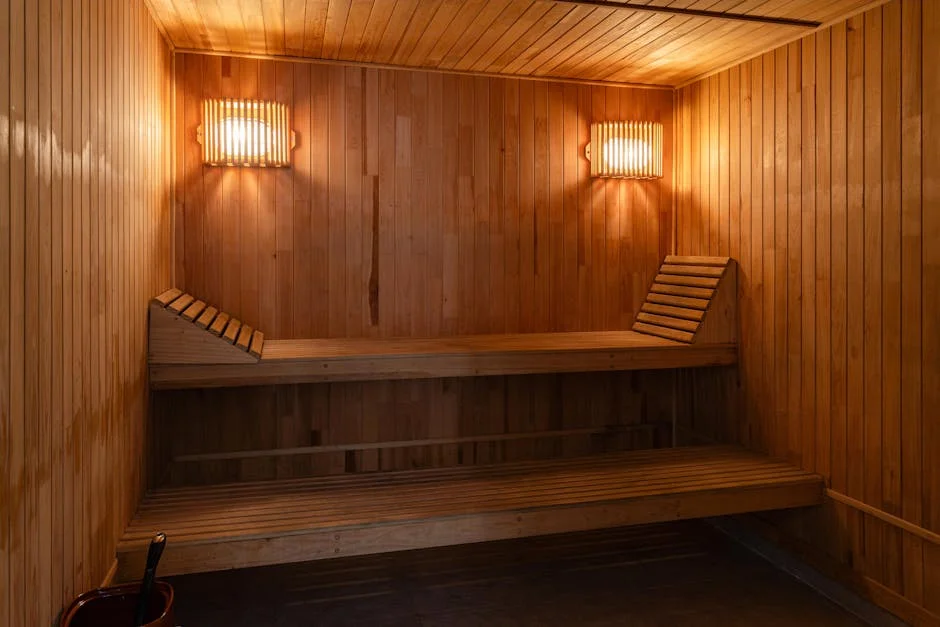
Sizing the Heater to the Room
Output sizing is where most installation problems originate. The standard starting point is 1 kW per 45 cubic feet of room volume, but that formula assumes good insulation, no exterior glass, and interior-facing walls. Each masonry or concrete wall surface adds approximately 25% to the effective volume for sizing purposes; glass walls or panels add more. An honest assessment of your room’s construction before selecting a heater will prevent the frustrating and expensive situation of replacing an undersized unit after installation.
Room height matters alongside floor area. A sauna with an unusually high ceiling , anything above 7 feet , distributes the heater’s output across more air volume than the floor footprint suggests. Keep ceiling height at or below 7 feet where possible; if an existing room has a higher ceiling, factor that volume fully into your sizing calculation.
Dedicated Circuit Requirements
Every residential electric sauna heater in the practical output range requires its own dedicated 240V circuit. This is not a cost-cutting area. Running a sauna heater on a shared circuit creates overload risk and is a code violation under the NEC in U.S. jurisdictions. The circuit’s amperage , typically 40A for 6, 9 kW heaters , must match the heater manufacturer’s specification exactly.
GFCI protection is required by the NEC for sauna installations. The GFCI breaker protects against ground fault conditions in a wet or humid environment. Ensure the electrician you hire is familiar with sauna installation requirements specifically , not all residential electricians have pulled a sauna permit, and the specifics of the NEC section governing sauna wiring are worth confirming in advance.
Control Wiring and Accessory Compatibility
The heater’s control box, any timer, and all connection cabling form a system that needs to be specified as a whole. A smart timer rated for 20A is not appropriate on a 40A heater circuit. Connection cables must be rated for the operating temperature inside a sauna enclosure , standard residential wire insulation degrades at the temperatures present in a properly functioning sauna room.
Manufacturers like Harvia publish compatible control box models for each heater. Following those compatibility recommendations protects the warranty and ensures the full system meets code. Substituting off-specification components because they are cheaper is one of the more common sources of heater failures reported in the r/Sauna community.
Planning Installation Sequence
A sauna installation has a logical sequence that shouldn’t be inverted. Electrical rough-in happens while walls are open , before insulation and paneling go in. Heater placement, bench positioning, and clearances should all be resolved on paper before framing begins. Changes made after the walls are closed are expensive.
The sauna installation sequence that experienced builders follow puts electrical planning at the same stage as framing, not after it. The permit process also has a sequence: the electrical permit should be pulled before the electrician begins work, and the rough-in inspection should be completed before walls are closed. Waiting until late in the build to address the heater circuit is one of the most avoidable causes of project delays.
Clearances and Safety Distances
Every manufacturer publishes minimum clearances for their heaters , distances from benches, walls, and combustible materials. These are not conservative suggestions; they are engineering specifications derived from heat output and ignition testing. Harvia’s installation manuals are detailed on this point and are publicly available on their website.
The most common clearance error is placing benches too close to the heater sides or top. A heater that appears to have adequate surrounding space based on visual inspection may still violate the clearance specification once bench thickness and positioning are measured precisely. Confirm all clearances against the manufacturer’s published diagram, not an approximation, before finalizing your bench build.
Frequently Asked Questions
How many kilowatts do I need for my sauna room?
The standard starting estimate is 1 kW per 45 cubic feet of properly insulated sauna space. Adjust upward for masonry walls, exterior-facing surfaces, or glass panels , each adds meaningfully to the effective load on the heater. A typical 6×8×7-foot home sauna runs approximately 336 cubic feet, which points to a 7, 8 kW unit like the Harvia The Wall. Confirm your specific room dimensions and wall construction before finalizing an output target.
What electrical circuit does a sauna heater require?
Most residential sauna heaters in the 6, 9 kW range require a dedicated 240V/40A circuit with GFCI protection. The exact amperage depends on the specific heater model , always confirm against the manufacturer’s specification sheet. A licensed electrician should pull the appropriate permit and complete the wiring. Running a sauna heater on an existing shared circuit is both a safety risk and a code violation under the NEC.
What is the difference between a dry sauna heater and a steam generator?
A dry sauna electric heater warms the air and stones in an enclosed sauna room, producing low-humidity radiant heat. A steam generator heats water to produce steam output into a sealed shower or steam room enclosure. They are not interchangeable , the room construction, sealing requirements, and ventilation logic differ significantly between the two. The 4.5KW Steam Room Generator Kit is a wet-heat unit; the Harvia The Wall is a dry sauna heater.
Can I use a smart timer to control my sauna heater?
A smart timer can control the circuit that powers a sauna heater, but the timer must be rated for the full amperage draw of the heater circuit. A Smart Water Heater Timer rated below the circuit’s load is a fire hazard regardless of its smart features. Verify the timer’s load rating against your heater’s running amperage before installation, and have a licensed electrician confirm the wiring is correct.
Do sauna heater connection cables need to be special rated?
Yes. Sauna interiors reach temperatures that exceed the ratings of standard residential electrical cable. Any cable run inside the sauna enclosure , including the connection cable between the heater and the control box , must be rated for high-temperature sauna environments. Standard insulation degrades at sauna operating temperatures, creating both failure and fire risk.
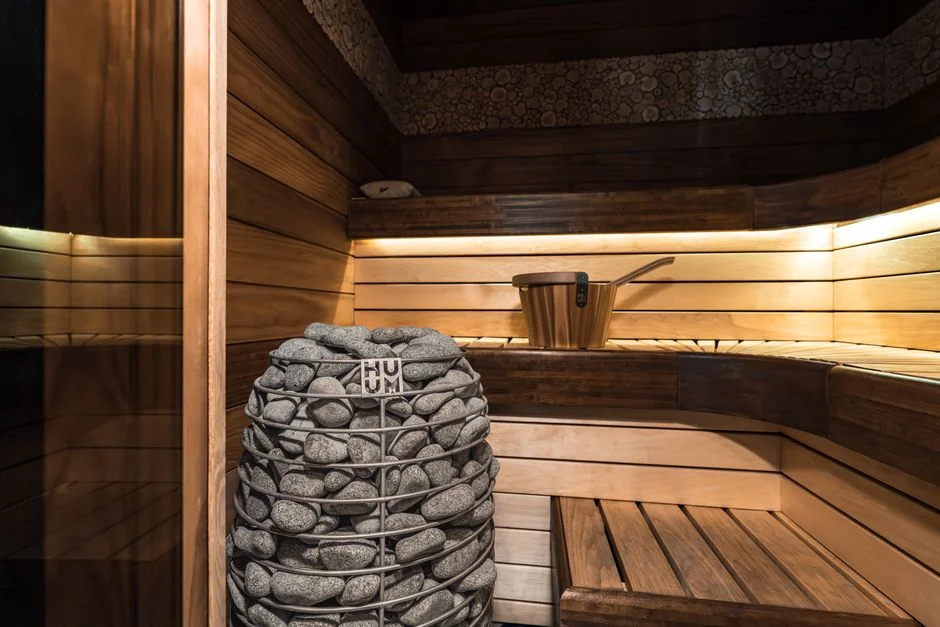
Where to Buy
Harvia The Wall Electric Sauna Heater, Powerful 240V Sauna Stove for Medium Sized Rooms, Illuminated Operating Panel, Electric Heater for Dry Sauna Room, Includes Stones (8kW - Stainless Steel)See Harvia The Wall Electric Sauna Heater… on Amazon