Indoor Saunas Buyer's Guide: Types, Features & Setup

Affiliate disclosure: Some links on this page are affiliate links. If you buy through them we earn a small commission at no extra cost to you. Recommendations are research-driven; we don't claim personal use of every product reviewed. Product prices and availability are accurate as of the date published and are subject to change. Always check Amazon for current pricing before purchasing. Learn more.
Quick Picks
OUTEXER Traditional Steam Sauna Home Spa Room for 2-3 Person Steam Wet Indoor Saunas with 240V 3KW Heater,Sauna Stone, Water Bucket, Ladle, LED Lights
Quality construction suited to regular home sauna use
Buy on AmazonDynamic Home Infrared Sauna Room 1 to 2 Person Wooden Canadian Hemlock 1260W Graphene Carbon Plate Heater Indoor Saunas
Quality construction suited to regular home sauna use
Buy on AmazonX-Vcak 2 Person Sauna, Extra Large Sauna, Portable Steam Sauna Tent with 2 Steamers, 2 Folding Chair, 71”x 49”x 36”, Black
Quality construction suited to regular home sauna use
Buy on Amazon| Product | Price Range | Top Strength | Key Weakness | Buy |
|---|---|---|---|---|
| OUTEXER Traditional Steam Sauna Home Spa Room for 2-3 Person Steam Wet Indoor Saunas with 240V 3KW Heater,Sauna Stone, Water Bucket, Ladle, LED Lights best overall | $$$ | Quality construction suited to regular home sauna use | Confirm specifications match your specific installation space and electrical requirements | Buy on Amazon |
| Dynamic Home Infrared Sauna Room 1 to 2 Person Wooden Canadian Hemlock 1260W Graphene Carbon Plate Heater Indoor Saunas also consider | $$$ | Quality construction suited to regular home sauna use | Confirm specifications match your specific installation space and electrical requirements | Buy on Amazon |
| X-Vcak 2 Person Sauna, Extra Large Sauna, Portable Steam Sauna Tent with 2 Steamers, 2 Folding Chair, 71”x 49”x 36”, Black also consider | $$$ | Quality construction suited to regular home sauna use | Confirm specifications match your specific installation space and electrical requirements | Buy on Amazon |
| Generic 3 Person Infrared Sauna 0-5mG Ultra Low EMF Far Infrared Sauna for Home 2130W/20A Canadian Hemlock Indoor Sauna with Front Door Heating Panel, Chromotherapy Lights also consider | $$$ | Quality construction suited to regular home sauna use | Confirm specifications match your specific installation space and electrical requirements | Buy on Amazon |
| MEISSALIVVE Full Spectrum Infrared Sauna,2-3 Person Home Sauna,Wooden Canadian Hemlock Indoor Spa Sauna with Resonance Speaker, Panoramic Tempered Glass Door also consider | $$$ | Quality construction suited to regular home sauna use | Confirm specifications match your specific installation space and electrical requirements | Buy on Amazon |
Choosing an indoor sauna means making a decision that will shape how you recover, unwind, and use your home for years. The category spans traditional steam rooms, infrared cabins, and portable tent-style units , each with meaningfully different installation requirements, heat profiles, and daily experiences. A solid starting point is the full indoor saunas resource, which covers the broader category before you narrow to a specific model.
The differences that matter most are not always visible in product photos. Electrical load, cabinet material, heater technology, and footprint interact in ways that can make an otherwise appealing unit the wrong fit for a particular space. Understanding those factors before evaluating specific products produces better decisions than comparing spec sheets in isolation.
What to Look For in an Indoor Sauna
Heater Type and Heat Profile
The choice between infrared and traditional steam is the most consequential decision in this category, and it shapes every other variable. Traditional steam saunas , sometimes called Finnish-style or wet saunas , heat the air and surfaces to high temperatures, typically between 150°F and 195°F, with humidity introduced by pouring water over hot stones. The experience is intense, enveloping, and closely aligned with Nordic sauna tradition. Infrared saunas operate at lower ambient temperatures, typically 120°F to 145°F, by emitting radiant heat that warms the body more directly rather than heating the surrounding air.
Neither approach is objectively superior. Traditional steam delivers the deep heat and löyly , the steam event , that Finnish tradition centers the sauna experience around. Infrared units heat up faster, typically in 15 to 30 minutes versus 45 to 60 minutes for a traditional heater, and they draw less electrical power at steady state. Owner reports in r/Sauna suggest that buyers who grew up with traditional saunas often find infrared a meaningful departure, while buyers new to home sauna use frequently prefer infrared for its faster warm-up and lower operating complexity.
Full-spectrum infrared units add near- and mid-infrared wavelengths to the standard far-infrared output. Manufacturer claims about the differential benefits of each wavelength are not consistently supported by independent research, but the broader heat distribution is a real difference in how the cabinet feels at operating temperature.
Electrical Requirements
Every permanent indoor sauna cabin , whether traditional steam or infrared , requires a dedicated electrical circuit. Traditional steam heaters in the 3kW range typically require a 240V/20A circuit. Larger infrared units in the 2,000W range also commonly require 240V, though some smaller single-person infrared units can run on a standard 120V/15A circuit. Portable steam tent units with smaller steamers sometimes operate on standard household current, but multi-steamer configurations increase the load significantly.
Confirming the circuit requirement against your home’s available panel capacity is non-negotiable before purchase. A licensed electrician should evaluate whether your panel can support the additional load and pull the permit where required. The cost of that evaluation is modest relative to the cost of the sauna itself, and skipping it creates both safety risk and resale complications.
Space, Ventilation, and Flooring
Permanent sauna cabins require more floor space than their exterior dimensions suggest. Clearance around all four sides for airflow and access, plus door swing, typically adds 12 to 18 inches to each dimension. A unit listed at 47 inches wide needs close to 5 feet of clear floor width to install properly.
Ventilation matters differently for traditional and infrared units. Traditional steam rooms generate significant humidity and require either a ventilation gap at floor level or a powered exhaust to prevent moisture damage to surrounding walls and flooring. Infrared cabins produce far less ambient humidity, but they still require adequate air exchange to prevent overheating of the surrounding room. Flooring under a traditional steam unit should be water-tolerant , tile is the standard choice. Infrared cabins on wood flooring should have a moisture barrier underneath.
EMF Considerations for Infrared Units
Electromagnetic field output is a recurring concern among infrared sauna buyers, particularly for carbon plate heater units. The relevant measurement is the field strength at body distance during normal use, not at the heater surface. Reputable manufacturers publish EMF test data in their specifications; units claiming ultra-low EMF output , generally defined as 3mG or below at standard operating distance , should provide that documentation. SaunaSeeker has noted that third-party verification of EMF claims varies widely across the category, and buyer reports on r/Sauna reflect meaningful skepticism toward marketing language that isn’t backed by documented testing.
The full range of indoor sauna options is worth reviewing alongside EMF specifications if this factor is a priority for your purchase decision.
Top Picks
OUTEXER Traditional Steam Sauna Home Spa Room for 2-3 Person
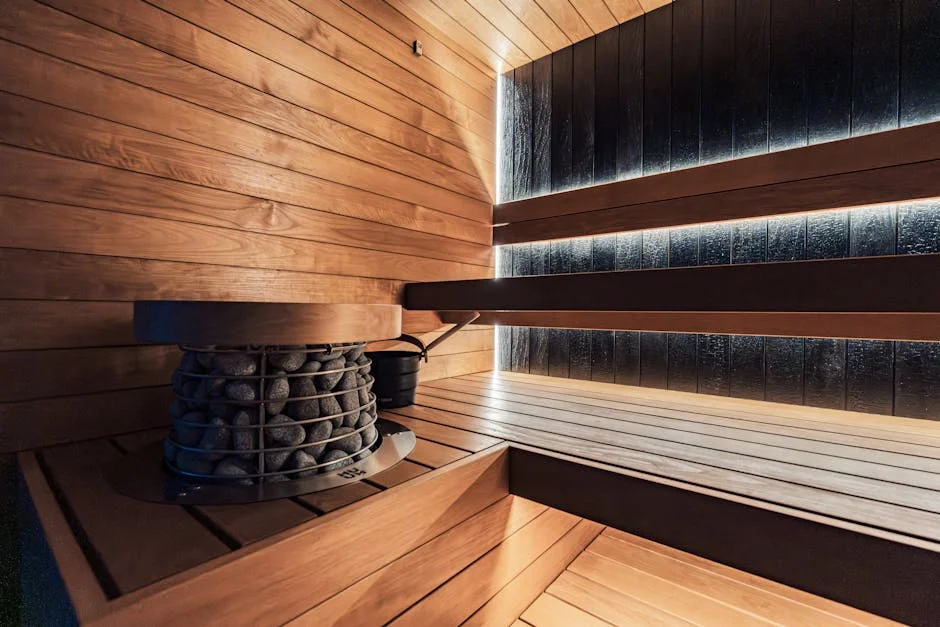
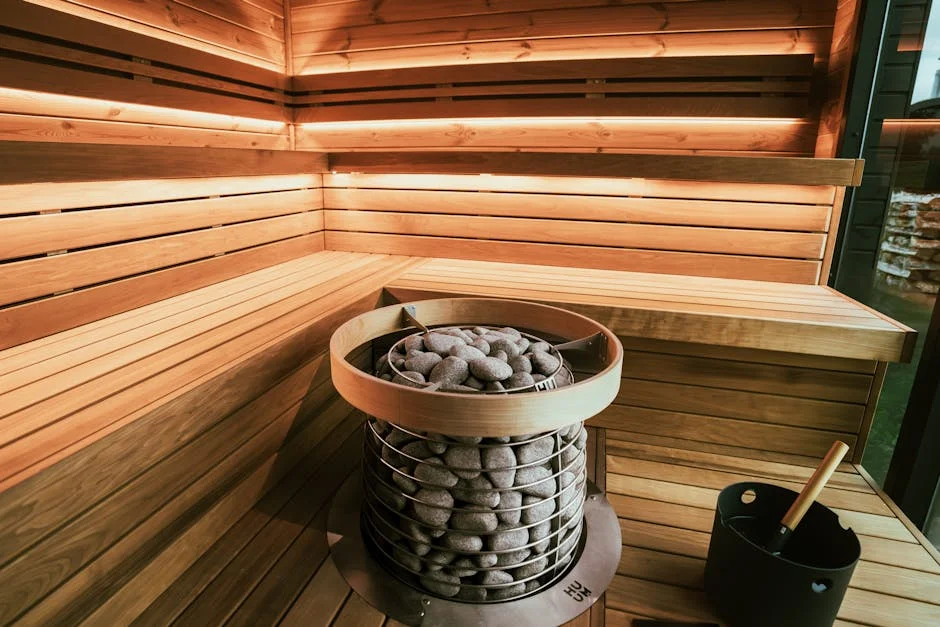
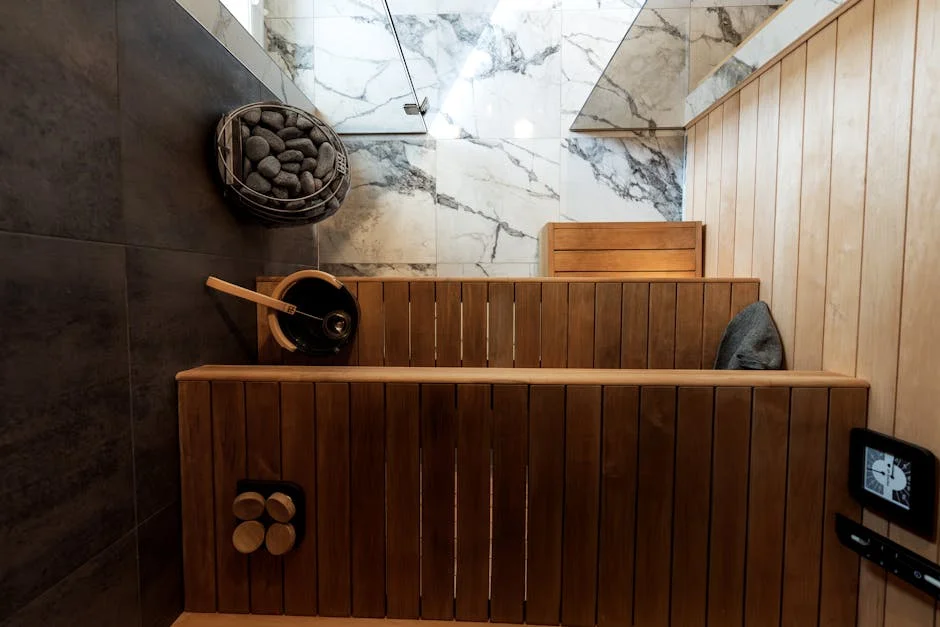
The OUTEXER Traditional Steam Sauna is a purpose-built traditional wet sauna designed for two to three people, equipped with a 240V 3kW heater and the full complement of accessories , sauna stone, water bucket, ladle, and LED lighting. For buyers who want the genuine high-heat, high-humidity Finnish sauna experience rather than an infrared approximation, this is the product in this comparison that delivers it most directly.
The 240V electrical requirement means a dedicated circuit is required before installation , this is not a plug-and-play unit. Owner reports confirm that the heater reaches operating temperature in a range consistent with traditional sauna expectations, and the stone load is sufficient to hold heat through multiple löyly cycles. The cabinet construction draws consistently favorable comments for a unit at this price band, with verified buyers noting the fit of the tongue-and-groove panels and the solidity of the door hardware.
Ventilation planning is important for a traditional steam unit installed indoors. The humidity output is meaningful, and the installation space needs either a floor-level vent or a powered exhaust solution to protect surrounding walls. Confirm your local permitting requirements before installation , many jurisdictions require a permit for permanent sauna installations that involve new electrical work.
Check current price on Amazon.
Dynamic Home Infrared Sauna Room 1 to 2 Person
The Dynamic Home Infrared Sauna Room is a one-to-two-person Canadian Hemlock cabin with graphene carbon plate heaters rated at 1,260W. Graphene carbon panels are a relatively recent development in the infrared category; the material allows for a thinner panel profile and more even heat distribution across the heater surface compared to standard carbon fiber panels, according to manufacturer specifications.
Canadian Hemlock is a wood choice with a consistent reputation in the sauna category. It is dimensionally stable under thermal cycling, resists warping better than softer woods, and has a neutral aroma that doesn’t compete with eucalyptus or cedar during a session. Verified buyer reports for this unit reflect positively on the panel-to-panel fit and the warm-up time, which owner accounts place in the 20 to 30 minute range to reach a comfortable operating temperature.
The 1,260W draw at 120V means this unit may be compatible with a standard household circuit in some configurations, though confirming the specific circuit requirement with an electrician before purchase remains the correct approach. For a buyer working with a limited footprint and a preference for infrared over traditional steam, this is a well-constructed option at its size category.
Check current price on Amazon.
X-Vcak 2 Person Sauna
The X-Vcak 2 Person Portable Steam Sauna Tent occupies a distinct category from the permanent cabins in this comparison. At 71 by 49 by 36 inches and built around two steam generators rather than a hardwired heater, it is the most flexible option here in terms of placement and setup , there is no permanent installation, no dedicated circuit requirement, and no need to plan around ventilation infrastructure.
The trade-off is experiential rather than qualitative. A tent-style steam sauna does not replicate the radiant heat, the wood cabin atmosphere, or the heat retention of a permanent unit. What it does deliver is steam therapy in a form that can be set up, used, and stored without structural commitment. The dual-steamer configuration is a meaningful differentiator in the portable category; owner reports note that two generators maintain temperature more consistently during extended sessions than single-steamer alternatives.
The electrical load of two steamers running simultaneously warrants attention. Confirm that the circuit you plan to use can handle the combined draw without tripping , a dedicated 15A circuit is the safer approach even if the unit does not technically require it. For renters, buyers in temporary housing, or anyone not ready to commit to a permanent installation, this is the realistic path to a home sauna experience.
Check current price on Amazon.
3 Person Infrared Sauna 0-5mG Ultra Low EMF
The 3 Person Infrared Sauna leads with its EMF specification , 0 to 5mG ultra-low EMF at operating distance , and backs it with a 2,130W/20A power draw that requires a dedicated 240V circuit. For a three-person infrared cabin, that power rating is appropriate to the volume being heated, and the front door heating panel configuration is worth noting: placing a heater element in the door maximizes the radiant coverage of a larger cabin volume.
The chromotherapy lighting is a feature with more buyer traction than it sometimes receives in editorial coverage. r/Sauna community reports suggest that buyers who initially dismiss it as a novelty use it more consistently than expected once the unit is in regular rotation. The Canadian Hemlock construction is consistent with the category standard for this price band.
The EMF claim requires context. The 0 to 5mG specification refers to far-infrared body exposure at standard operating distance, and it is a legitimate differentiator among carbon panel infrared units. Buyers for whom EMF is a primary concern should verify that the manufacturer provides third-party test documentation, not just marketing language. Verified buyer reports for this unit are largely favorable on build quality and heat consistency across the three-person volume.
Check current price on Amazon.
MEISSALIVVE Full Spectrum Infrared Sauna 2-3 Person
Full-spectrum infrared , the combination of far, mid, and near infrared output , is what distinguishes the MEISSALIVVE Full Spectrum Infrared Sauna from the far-infrared-only units in this comparison. The panoramic tempered glass door is a design feature that meaningfully changes the feel of the cabin during use; the increased visual openness reduces the enclosed-space pressure some buyers associate with traditional sauna cabins, and it allows natural light into the space during daytime sessions.
The integrated Resonance speaker system is a thoughtful addition for buyers who use sauna sessions for deliberate recovery periods rather than meditative silence , the Bluetooth connectivity allows audio without the moisture concerns of bringing personal devices into a steam environment. The Canadian Hemlock construction is consistent with quality expectations for the category.
For a buyer choosing between this and the three-person infrared unit above, the differentiators are the full-spectrum heater output, the glass door design, and the audio integration. The MEISSALIVVE is the more feature-rich option. Owner reviews highlight the glass door as the standout element , buyers consistently describe the cabin as feeling larger and less claustrophobic than the dimensions suggest.
Check current price on Amazon.
Buying Guide
Traditional Steam vs. Infrared: Making the Right Call
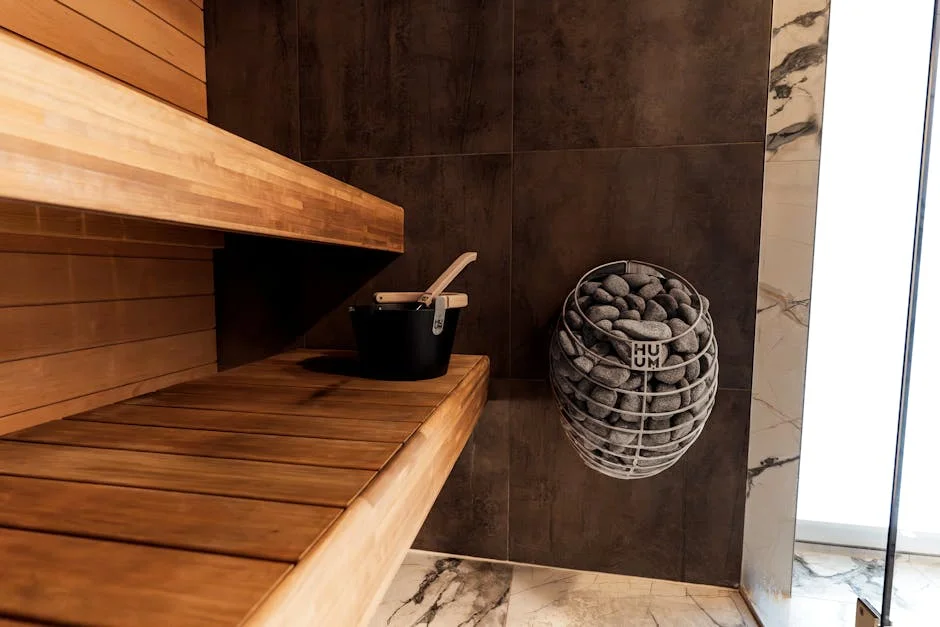
The single most consequential variable in selecting an indoor sauna is the heater type, and the right answer depends on what you expect the experience to feel like. Traditional steam saunas deliver high ambient heat with humidity , the combination that Finnish sauna culture is built around. Infrared units deliver radiant warmth at lower air temperatures with minimal humidity. Buyers who have used traditional saunas before and are trying to replicate that experience at home should look seriously at the OUTEXER or a comparable traditional steam unit. Buyers new to home sauna who prioritize fast warm-up times and simpler installation logistics often find infrared the better fit.
Electrical Planning Before You Buy
Every permanent sauna cabin in this comparison requires a dedicated electrical circuit, and the circuit requirement varies by unit. Traditional 3kW steam heaters require 240V/20A. Larger infrared cabins at 2,100W also require 240V/20A. Mid-range infrared units at 1,260W may be compatible with a standard 120V circuit depending on configuration. Portable steam tent units vary by steamer count and wattage. The correct process is to identify the unit’s electrical specification, then have a licensed electrician confirm whether your panel has available capacity before purchasing.
The permit question follows directly. Most jurisdictions require a permit for new electrical circuits regardless of the sauna installation itself. Some also require a permit for the structural installation. Checking with your local building department before purchasing avoids complications at resale and ensures the installation meets fire and moisture code requirements.
Sizing for the Space You Have
Permanent sauna cabins are specified by interior person capacity, but the relevant measurement for installation planning is the exterior dimension plus clearance. Add 12 to 18 inches on the sides and rear for airflow and access, confirm the door swing direction and clearance, and measure ceiling height , some units ship with panels that require assembly headroom. The indoor sauna category page includes a detailed sizing guide that maps common room dimensions to compatible unit footprints.
For buyers with limited space, a one-to-two-person infrared cabin or a portable steam tent is the realistic range. For buyers with a dedicated room , a spare bedroom, a finished basement corner, a large bathroom , a two-to-three-person traditional or infrared unit is achievable with proper planning.
Understanding EMF Claims in Infrared Products
EMF output is a legitimate specification to evaluate in infrared sauna products, and the category has enough inconsistency in how manufacturers report it to warrant scrutiny. The number that matters is the field strength measured at body distance during normal use , not at the heater surface, and not under test conditions that don’t reflect actual seated operation. Units marketed as ultra-low EMF should specify the measurement methodology and provide documentation from third-party testing, not just a self-reported figure.
For the units in this comparison, the 3 Person Infrared Sauna and the MEISSALIVVE both address EMF in their specifications. Buyers for whom EMF output is a primary concern should request documentation before finalizing a purchase and cross-reference with community reports on r/Sauna, where buyers with EMF measurement devices occasionally post independent readings.
Ventilation and Moisture Management
Traditional steam units require active moisture management. Humidity output during a session is high enough to cause damage to drywall, wood flooring, and painted surfaces if the installation space is not ventilated correctly. The standard solutions are a floor-level vent gap for passive airflow or a powered bathroom-style exhaust fan rated for the cubic footage of the installation space. Tile flooring and moisture-resistant drywall or cement board on surrounding walls are the standard construction approach.
Infrared cabins produce far less ambient humidity, but they still require adequate air exchange. A room with no ventilation will overheat from the ambient heat output of the cabinet exterior, and the wood panels inside the cabin benefit from airflow between sessions to prevent moisture accumulation from perspiration. A simple ventilation gap or a small exhaust fan is usually sufficient for an infrared installation in a finished basement or spare room.
Frequently Asked Questions
What is the difference between a traditional steam sauna and an infrared sauna for home use?
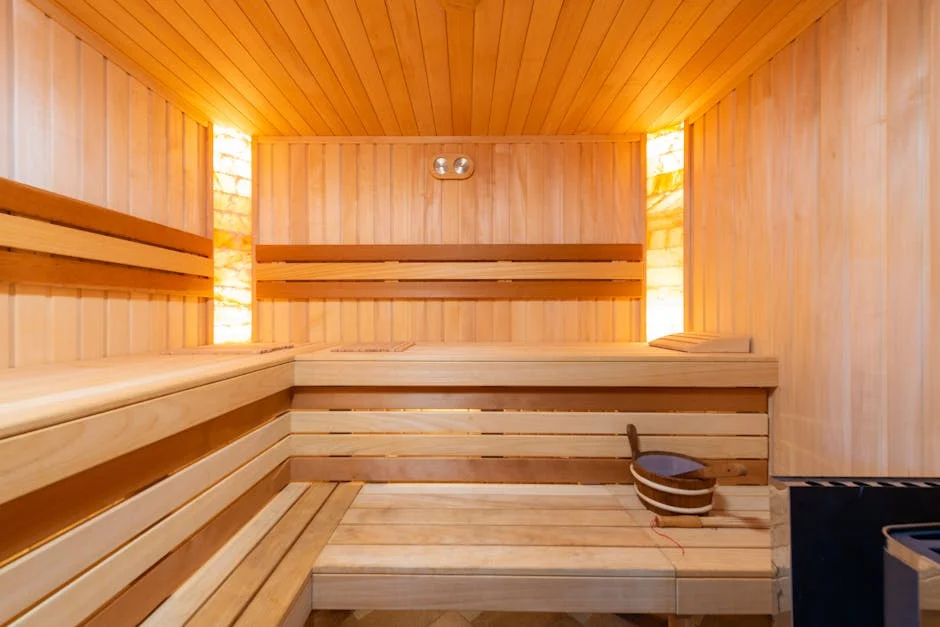
A traditional steam sauna heats the air and surfaces to high temperatures , typically 150°F to 195°F , and allows you to add humidity by pouring water over hot stones. An infrared sauna operates at lower ambient temperatures by emitting radiant heat that warms the body more directly. Traditional steam delivers the classic Finnish löyly experience; infrared heats up faster and typically draws less electrical power during operation. The right choice depends on the experience you’re trying to create.
Do I need an electrician to install an indoor sauna?
Yes, for any permanent cabin unit. Traditional steam heaters and most full-size infrared cabins require a dedicated 240V circuit that must be installed by a licensed electrician. Portable steam tent units may operate on standard household current, but dual-steamer configurations increase the load enough that confirming the circuit capacity is still the correct step. Most jurisdictions also require a permit for new electrical circuits, and some require a permit for the sauna installation itself.
How much space do I need for a 2-3 person indoor sauna?
The exterior footprint plus clearance is the relevant measurement. A two-to-three-person cabin typically measures 47 to 60 inches wide and 40 to 48 inches deep on the exterior. Add 12 to 18 inches on the sides and rear for airflow and service access, then account for door swing direction. Most two-to-three-person units require a ceiling height of at least 84 inches.
Is the MEISSALIVVE full-spectrum sauna worth the upgrade over a standard far-infrared unit?
The differentiators are the full-spectrum heater output, the panoramic glass door, and the integrated speaker system. Full-spectrum infrared adds near- and mid-infrared wavelengths to the standard far-infrared output , the differential benefits are debated, but the broader heat distribution is a real difference in how the cabinet feels. The glass door is consistently cited in owner reviews as a significant quality-of-experience improvement. If those features align with how you plan to use the sauna, the MEISSALIVVE represents a meaningful step up.
Can I install a permanent indoor sauna in a finished basement?
A finished basement is one of the more practical locations for a permanent indoor sauna installation. Concrete flooring handles moisture well, ceiling heights in most basements accommodate standard cabin dimensions, and the space is typically already separated from living areas. The considerations are the same as any indoor installation , dedicated electrical circuit, ventilation planning, and moisture management for traditional steam units , plus confirming that the unit can be transported through access points (stairs, doorways) during delivery and setup.
Where to Buy
OUTEXER Traditional Steam Sauna Home Spa Room for 2-3 Person Steam Wet Indoor Saunas with 240V 3KW Heater,Sauna Stone, Water Bucket, Ladle, LED LightsSee OUTEXER Traditional Steam Sauna Home … on Amazon