Traditional Indoor Sauna Buyer's Guide: Types and Setup

Affiliate disclosure: Some links on this page are affiliate links. If you buy through them we earn a small commission at no extra cost to you. Recommendations are research-driven; we don't claim personal use of every product reviewed. Product prices and availability are accurate as of the date published and are subject to change. Always check Amazon for current pricing before purchasing. Learn more.
Quick Picks
OUTEXER Traditional Steam Sauna Home Spa Room for 2-3 Person Steam Wet Indoor Saunas with 240V 3KW Heater,Sauna Stone, Water Bucket, Ladle, LED Lights
Quality construction suited to regular home sauna use
Buy on AmazonX-Vcak 2 Person Sauna, Extra Large Sauna, Portable Steam Sauna Tent with 2 Steamers, 2 Folding Chair, 71”x 49”x 36”, Black
Quality construction suited to regular home sauna use
Buy on AmazonGeneric 3 Person Infrared Sauna 0-5mG Ultra Low EMF Far Infrared Sauna for Home 2130W/20A Canadian Hemlock Indoor Sauna with Front Door Heating Panel, Chromotherapy Lights
Quality construction suited to regular home sauna use
Buy on Amazon| Product | Price Range | Top Strength | Key Weakness | Buy |
|---|---|---|---|---|
| OUTEXER Traditional Steam Sauna Home Spa Room for 2-3 Person Steam Wet Indoor Saunas with 240V 3KW Heater,Sauna Stone, Water Bucket, Ladle, LED Lights best overall | $$$ | Quality construction suited to regular home sauna use | Confirm specifications match your specific installation space and electrical requirements | Buy on Amazon |
| X-Vcak 2 Person Sauna, Extra Large Sauna, Portable Steam Sauna Tent with 2 Steamers, 2 Folding Chair, 71”x 49”x 36”, Black also consider | $$$ | Quality construction suited to regular home sauna use | Confirm specifications match your specific installation space and electrical requirements | Buy on Amazon |
| Generic 3 Person Infrared Sauna 0-5mG Ultra Low EMF Far Infrared Sauna for Home 2130W/20A Canadian Hemlock Indoor Sauna with Front Door Heating Panel, Chromotherapy Lights also consider | $$$ | Quality construction suited to regular home sauna use | Confirm specifications match your specific installation space and electrical requirements | Buy on Amazon |
| MEISSALIVVE Full Spectrum Infrared Sauna,2-3 Person Home Sauna,Wooden Canadian Hemlock Indoor Spa Sauna with Resonance Speaker, Panoramic Tempered Glass Door also consider | $$$ | Quality construction suited to regular home sauna use | Confirm specifications match your specific installation space and electrical requirements | Buy on Amazon |
| Portable Steam Sauna Tent for Home 3L Infrared Sauna for Indoor, Outdoor, Gym, Spa also consider | $$$ | Quality construction suited to regular home sauna use | Confirm specifications match your specific installation space and electrical requirements | Buy on Amazon |
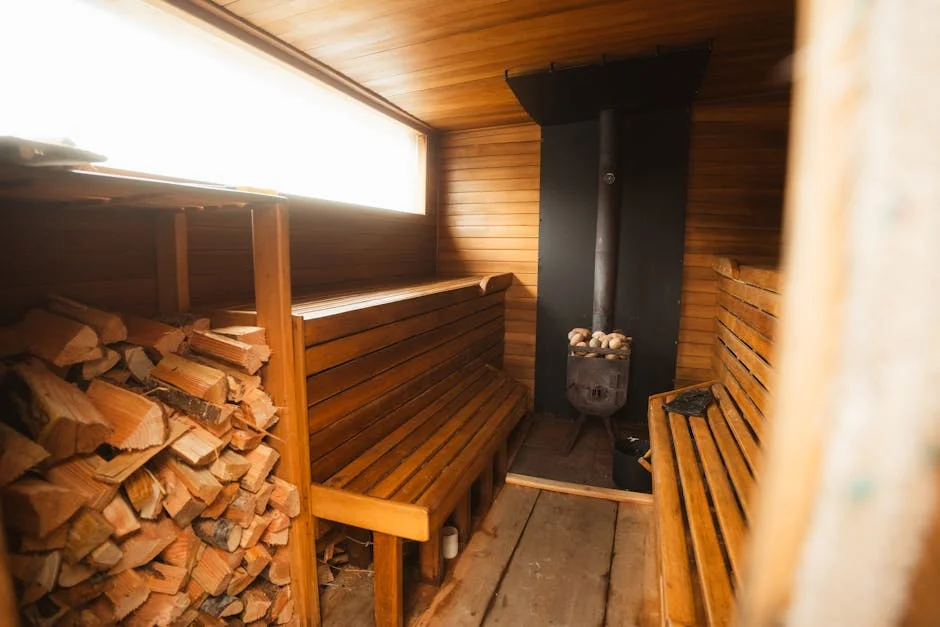
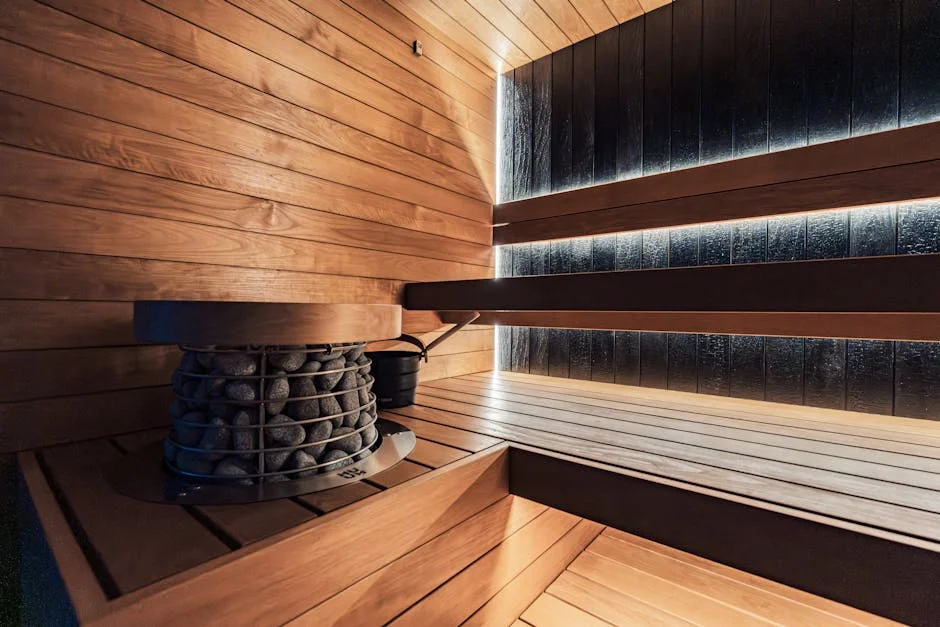
Home sauna ownership has moved well beyond the realm of spa hotels and Scandinavian retreats. A traditional indoor sauna gives you consistent, high-heat sessions in your own space , and the range of options available now covers everything from permanent wood-paneled rooms to compact portable tents that fold away after use. The challenge is matching the right format to your actual floor plan, electrical setup, and usage expectations.
What separates a satisfying long-term install from an expensive regret usually comes down to a handful of decisions made before purchase: heater type, room dimensions, ventilation, and whether your home can support the electrical draw. The five options in this review span that full range , steam-based traditional units, infrared panels, and portable alternatives.
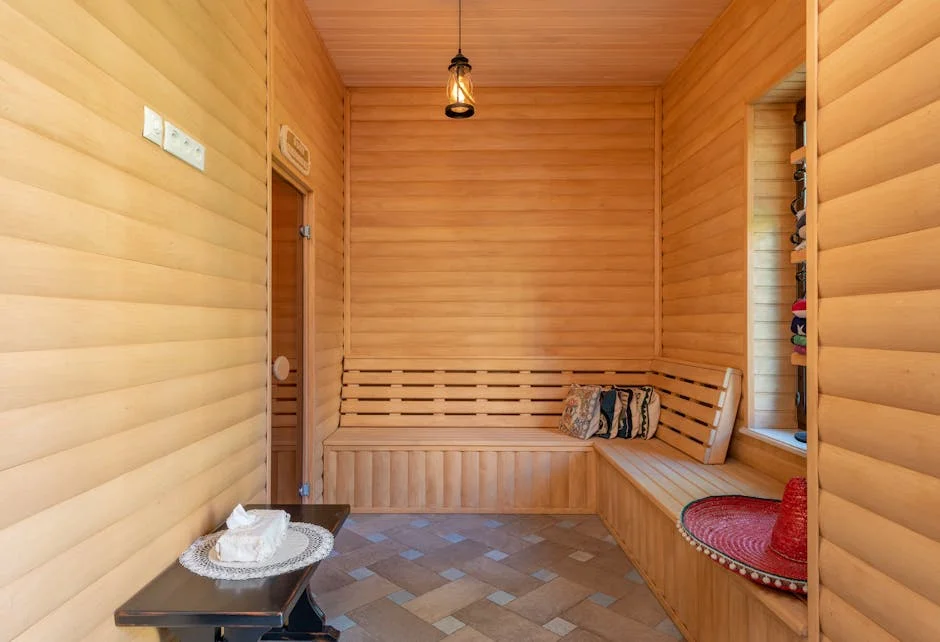
What to Look For in a Traditional Indoor Sauna
Heater Type and Heat Style
The two main paths in home saunas are traditional steam (also called Finnish-style or wet/dry) and infrared. Traditional steam heaters use electric elements to heat sauna stones, which radiate intense ambient heat , typically 160°F to 195°F , and allow you to pour water over the stones to generate löyly, the steam that defines the Finnish sauna experience. Infrared heaters emit radiant energy that warms the body directly at lower ambient temperatures, usually 120°F to 150°F.
Both approaches deliver heat and sweating, but they produce meaningfully different sensations. Traditional steam sessions feel more enveloping; the humidity is variable and controllable, and the high-temperature environment more closely matches what r/Sauna community members describe as the benchmark sauna experience. Infrared advocates point to longer sessions at lower temperatures as an advantage. Neither is universally superior , the right choice is the one that matches how you want to use the space.
A third category , portable steam tents , uses a separate steam generator to flood an enclosed fabric or nylon canopy. These are functional and eliminate installation complexity, but they operate differently from a wood-paneled room with a dedicated stone heater.
Electrical Requirements
This is where home sauna plans most commonly stall. Traditional steam saunas with 3kW to 6kW heaters typically require a dedicated 240V circuit, and the electrical work to install one costs real money if your panel isn’t already configured for it. A licensed electrician must evaluate your panel capacity and run the circuit; in most jurisdictions this also requires a permit.
Infrared saunas in the 1,800W to 2,400W range can sometimes operate on a standard 20A 120V circuit, though many 2- to 3-person units require 240V as well. Portable steam tents using a 1,000W to 1,500W generator typically run on standard 120V household outlets. Before purchasing any unit, pull the spec sheet and confirm the electrical requirements against your panel’s available capacity , not after delivery.
Space, Clearance, and Ventilation
A 2-person traditional sauna room needs roughly 4 feet by 4 feet of interior floor space at minimum, with ceiling height between 7 and 8 feet for proper heat stratification. The room itself must be larger than the unit’s interior dimensions , walls, framing, and clearance to combustibles add to the footprint. Most manufacturers specify minimum clearance requirements from the heater to walls and benches; follow these exactly.
Ventilation is not optional. Traditional high-heat saunas generate significant moisture , proper fresh air intake near the floor and an exhaust vent near the ceiling prevent mold, manage humidity, and keep the oxygen level safe during long sessions. Many pre-built units include a vent kit; verify this before assuming the room is self-contained.
Wood Species and Construction Quality
Hemlock and cedar are the two most common materials in pre-built home saunas. Canadian hemlock is stable, relatively lightweight, and takes heat well without excessive resin bleed , a characteristic that makes it popular in infrared units where the wood is in closer proximity to heaters for longer periods. Western red cedar is more aromatic, naturally antimicrobial, and has a longer track record in traditional high-temperature environments.
Construction quality is evident in joinery, panel thickness, and whether the unit uses tongue-and-groove solid wood or veneered panels over composite core. Thicker walls (typically 1-inch solid wood panels vs. thinner composites) provide better thermal retention. Browsing the full range of indoor sauna options side-by-side makes it easier to identify where manufacturers cut corners.
Permit and Code Considerations
Most municipalities require a permit for a permanently installed electric sauna because it involves a fixed electrical connection and a dedicated circuit. Portable units that plug into standard outlets typically do not trigger permit requirements. Pre-built sauna rooms that require a 240V hardwired connection almost always require a permit and inspection.
Consult your local building department before ordering. Requirements vary by jurisdiction, and some HOAs have additional restrictions on indoor structures that generate heat and moisture. Getting the electrical and structural sign-off upfront avoids forced removal or remediation later.
Top Picks
OUTEXER Traditional Steam Sauna Home Spa Room
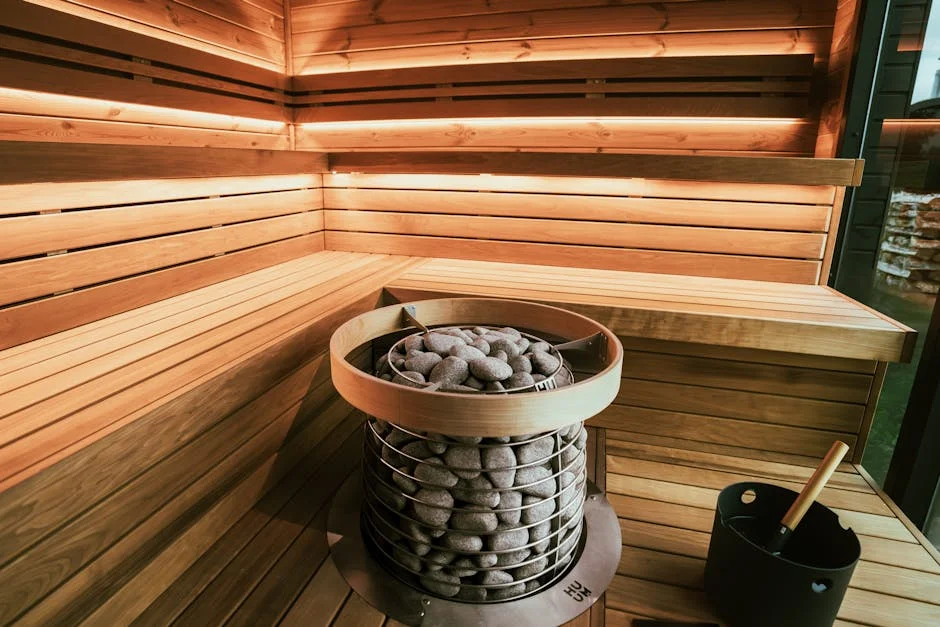
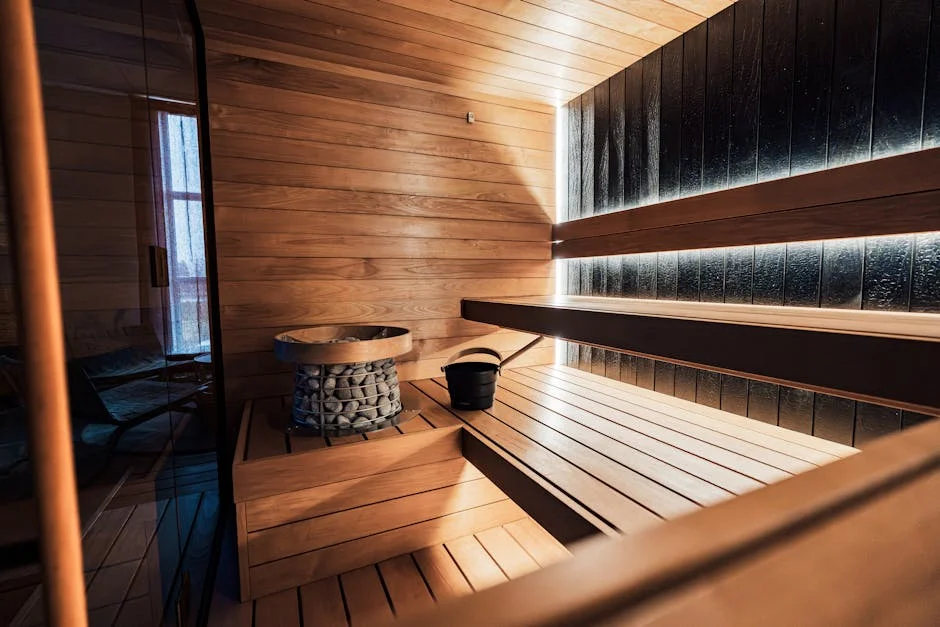
The OUTEXER Traditional Steam Sauna Home Spa Room is a wood-paneled wet/dry steam unit designed for 2-3 people, powered by a 240V 3kW electric heater with sauna stones included. The complete kit , bucket, ladle, LED lighting , gives buyers a functional traditional setup without assembling components separately.
The 3kW heater output is appropriate for a small to medium room of this type, and the 240V requirement means a dedicated circuit is non-negotiable. Verified buyers report the construction quality holds up under regular use, with consistent heating performance noted across owner reviews. The wet/dry capability means you can run dry sessions or add löyly as the session calls for , that flexibility is a meaningful advantage over infrared-only units.
Space planning is essential here. The unit’s listed dimensions are interior dimensions; allow additional clearance on all sides for wall framing, ventilation, and heater clearances as specified in the installation manual. Whether a permit is required depends on your jurisdiction, but given the dedicated 240V circuit, most localities will require one. Electrical work and any structural framing should be completed by licensed contractors.
Check current price on Amazon.
X-Vcak 2 Person Sauna Extra Large Portable Steam Tent
The X-Vcak 2 Person Sauna takes a different approach , it’s a portable steam tent rather than a permanent room, running 71” x 49” x 36” with dual steam generators and two folding chairs included. The fabric enclosure and modular design mean setup and breakdown require no tools and no dedicated space.
Dual 2-person steam generators give this unit more output than single-steamer tent alternatives, and the large footprint means two users aren’t cramped during a session. Owner reviews consistently note the ease of setup as a primary advantage, particularly for renters or anyone who can’t modify their home’s electrical system for a 240V installation. The steam experience differs from a stone-heater sauna , humidity levels are high and ambient temperature is lower than a traditional room , but for buyers who want regular steam sessions without installation complexity, the trade-off is straightforward.
Electrical draw from the steamers is within standard household circuit capacity. No permit is typically required for a portable unit. Storage when not in use requires a dedicated closet or storage area , at nearly six feet tall when assembled, this isn’t a unit that folds into a shelf.
Check current price on Amazon.
3 Person Infrared Sauna Ultra Low EMF
The 3 Person Infrared Sauna is a Canadian hemlock unit rated at 0, 5mG EMF output, drawing 2,130W on a 20A circuit. The front door heating panel, chromotherapy lighting, and 3-person interior make it one of the more feature-complete options in this group for buyers who prefer infrared over traditional steam.
Ultra-low EMF is a specification that carries real weight in the infrared sauna category , r/Sauna community members and SaunaSeeker’s coverage consistently flag EMF levels as a primary differentiator among infrared units. The published 0, 5mG rating here is in line with what buyers should look for in this segment. The Canadian hemlock construction is appropriate for the infrared application, offering dimensional stability under sustained heat exposure.
The 20A electrical requirement is more accessible than 240V , many homes can accommodate this on an existing circuit, though a dedicated circuit is still best practice to avoid breaker trips under full load. The 3-person interior provides meaningful bench space. Chromotherapy lighting is a secondary feature, but owner feedback on the hemlock construction quality is generally positive across verified buyer reviews.
Check current price on Amazon.
MEISSALIVVE Full Spectrum Infrared Sauna
Full-spectrum infrared is what distinguishes the MEISSALIVVE Full Spectrum Infrared Sauna from standard far-infrared units. Full-spectrum units emit near, mid, and far infrared wavelengths simultaneously, which manufacturers and some users report produces a more comprehensive heating sensation than far-infrared alone.
The panoramic tempered glass door is a significant design departure from solid-door sauna rooms , it opens the interior visually and changes the experience of enclosure, which some users find more comfortable for longer sessions. The integrated resonance speaker adds a practical amenity. Canadian hemlock construction follows the same reasoning as the previous infrared unit , stable, low-resin wood suited to sustained infrared heater exposure.
Electrical requirements should be confirmed against the specification sheet before purchase. Buyer accounts note consistent build quality and solid door hardware. For buyers who want the session variety that full-spectrum capability provides , and who are adding the unit to a dedicated home gym or wellness room where the glass door functions as a design feature , the case for this model over a standard far-infrared unit is clear.
Check current price on Amazon.
Portable Steam Sauna Tent for Home
The Portable Steam Sauna Tent for Home is the most compact and accessible entry point in this group , a single-person infrared and steam hybrid tent with a 3L steam generator suited for indoor, outdoor, or gym use. It’s not a substitute for a wood-paneled sauna room, but it fulfills a specific, practical role.
For buyers with limited space, a rental situation, or a budget that doesn’t extend to a permanent unit, this format delivers functional heat sessions without any installation. The 3L steam capacity supports sessions of reasonable duration before requiring a refill, and the unit’s portability means it can move between rooms or travel. Owner reviews are consistent on ease of use as the primary strength.
The session experience is meaningfully different from a traditional stone-heater room or even a larger steam tent. The enclosure is a single-person fabric canopy; temperatures and humidity levels are lower than a dedicated sauna room. For someone easing into regular sauna use, or supplementing an existing routine with a convenient at-home option, it serves that purpose well. Expect to plug into a standard household outlet , no dedicated circuit or permit required.
Check current price on Amazon.
Buying Guide
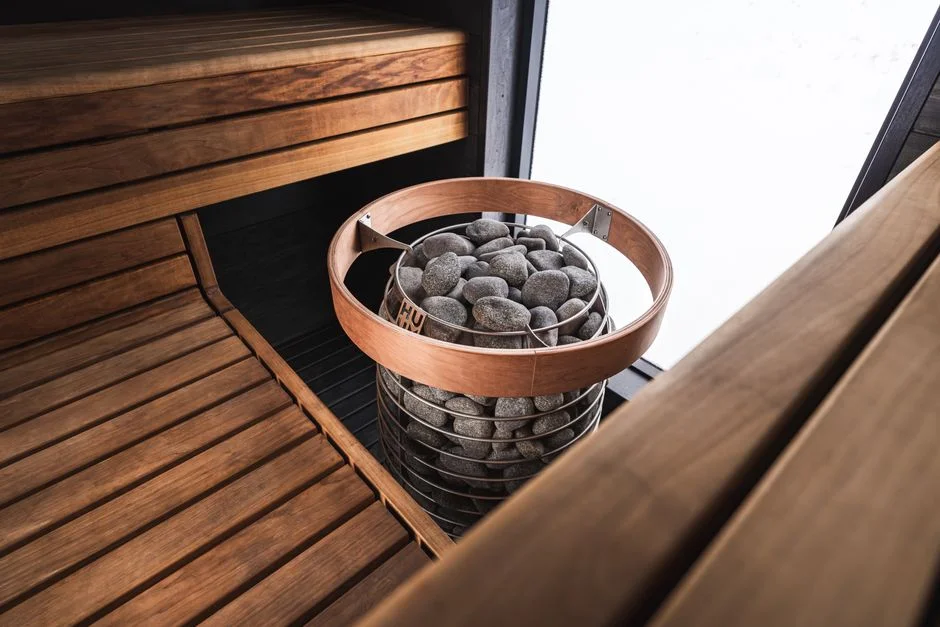
Matching Heater Type to Your Goals
The clearest decision point in this category is whether you want a traditional steam session or an infrared session. Traditional steam saunas , wood-paneled rooms with electric stone heaters , run at high ambient temperatures and allow water-on-stones steam generation. Infrared units run cooler and deliver radiant heat to the body without high ambient temperatures. Portable steam tents fall somewhere between: high humidity, moderate temperature, no stone heater.
Neither format is objectively superior. The Finnish sauna tradition is built around high heat and löyly; if that’s the benchmark experience you’re after, a traditional steam unit is the right category. If you prefer longer, lower-temperature sessions, infrared has a consistent following among regular users in the r/Sauna community. Matching heater type to your actual usage preference is more important than brand or feature count.
Electrical Planning Before You Order
Electrical compatibility is the most frequently underestimated requirement in home sauna purchasing. A 240V 3kW steam heater requires a dedicated circuit , one that typically does not exist in most rooms prior to installation. Running a 240V circuit involves panel capacity evaluation, wire runs, and a permit in most jurisdictions. This is not a DIY task and the cost is real.
Infrared units in the 2,100W, 2,400W range on a 20A circuit are more accessible but still warrant a dedicated breaker. Portable steam generators running on 120V are the lowest barrier electrically, but they also deliver the most limited session experience. Verify the specific amperage and voltage requirement for any unit you’re considering before placing an order , manufacturer spec sheets are the authoritative source.
Room Dimensions and Clearances
Interior dimensions listed by manufacturers are for the sauna interior, not the footprint in your room. A 2-person traditional sauna room needs floor space and overhead clearance beyond what the box dimensions suggest. The heater requires minimum clearance from walls, benches, and ceiling per the installation manual. Bench height, door swing direction, and floor drainage or moisture management all factor into whether the space works.
Measure twice. Confirm the unit’s installation manual clearances against your actual room before ordering. Buyers who skip this step and discover a clearance conflict post-delivery face costly returns on large freight-shipped items.
Ventilation and Moisture Management
Traditional steam saunas generate sustained high humidity. Proper ventilation , fresh air intake at floor level, exhaust near the ceiling , prevents moisture from migrating into adjacent walls, subfloor, or ceiling assemblies. Many manufacturers include a vent kit; confirm this before assuming the room manages airflow passively.
Infrared saunas produce lower humidity and are generally lower-risk on moisture management, but any wood enclosure that generates heat and perspiration benefits from adequate ventilation and an opportunity to dry between sessions. Leaving the door ajar after use is standard practice. Longer-term, good ventilation is what keeps a wood sauna room smelling clean and structurally sound after years of regular use. The full range of considerations is covered across the indoor sauna category if you’re comparing multiple formats simultaneously.
Permits and HOA Compliance
Permanently installed electric saunas almost always require a building permit. The electrical component , a dedicated 240V circuit , is the primary driver of permit requirements in most jurisdictions. Some municipalities also require mechanical permits for ventilation work. Portable units that operate on standard household outlets do not trigger permit requirements in most cases.
HOA rules are a separate consideration. Some HOAs restrict indoor structures that generate heat or moisture at a certain intensity, and others have rules around exterior modifications that affect ventilation. Check your HOA documents before purchasing a permanent unit. Getting compliance confirmed upfront is substantially easier than addressing it after installation.
Frequently Asked Questions
What’s the difference between a traditional steam sauna and an infrared sauna for home use?
Traditional steam saunas use an electric heater and stones to raise ambient room temperature to 160°F, 195°F; you can pour water on the stones to generate steam. Infrared saunas use radiant panels that heat the body directly at lower ambient temperatures, typically 120°F, 150°F. The sessions feel different , traditional steam is more enveloping and humidity-adjustable, while infrared tends toward longer, milder sessions. Neither is universally better; it depends on which experience you’re looking for.
Do I need a dedicated electrical circuit for a home sauna?
Most permanent traditional steam saunas require a dedicated 240V circuit, which must be installed by a licensed electrician and permitted in most jurisdictions. Some infrared units operate on a dedicated 20A 120V circuit, which is more common in existing homes. Portable steam tents and small personal steam units typically run on standard household outlets. Always confirm the voltage and amperage requirements on the manufacturer’s spec sheet before purchasing.
How much space do I need to install a 2, 3 person indoor sauna?
The interior dimensions listed by manufacturers do not include clearances required around the unit. A 2-person sauna room typically needs a minimum footprint of roughly 4 by 4 feet of interior space, plus additional room clearance for the heater, door swing, and ventilation. Confirm the installation manual’s specific clearance requirements against your actual room dimensions before ordering , freight returns on large sauna units are expensive and complicated.
Is the OUTEXER steam sauna or the MEISSALIVVE infrared sauna a better choice for a dedicated home wellness room?
The OUTEXER Traditional Steam Sauna delivers a traditional wet/dry stone-heater experience at 240V 3kW , the right choice if high-heat steam sessions are the goal. The MEISSALIVVE Full Spectrum Infrared Sauna offers full-spectrum radiant heat with a panoramic glass door, better suited to a wellness room where longer lower-temperature sessions and aesthetic presentation matter. The decision comes down to heater type preference first; both offer solid construction quality for a dedicated space.
Do portable steam sauna tents require any permits or special installation?
No. Portable steam tents operate on standard household electrical outlets and have no fixed installation component , no dedicated circuit, no structural modification. They do not trigger permit requirements in most jurisdictions. The trade-off is session experience: a fabric tent enclosure at moderate steam temperatures is a different environment than a wood-paneled sauna room with a stone heater.
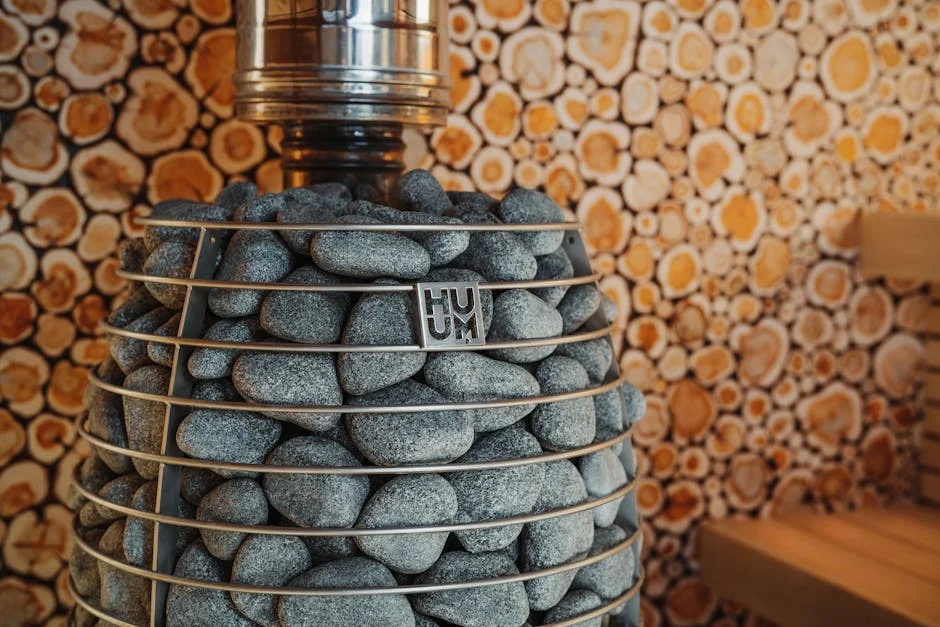
Where to Buy
OUTEXER Traditional Steam Sauna Home Spa Room for 2-3 Person Steam Wet Indoor Saunas with 240V 3KW Heater,Sauna Stone, Water Bucket, Ladle, LED LightsSee OUTEXER Traditional Steam Sauna Home … on Amazon